Alex Growth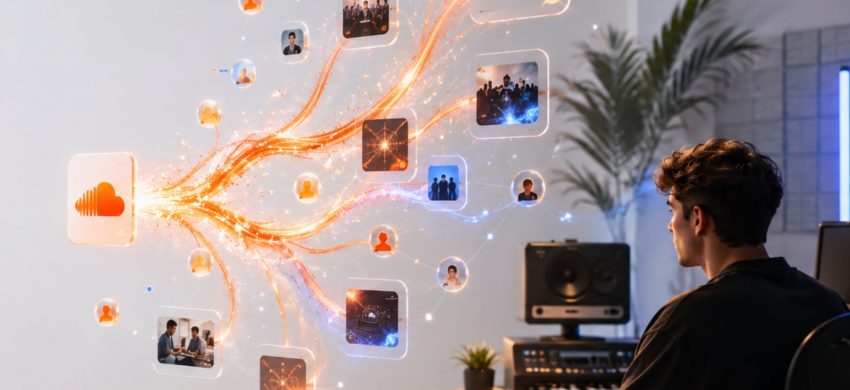
Straight to it
Producers grow on SoundCloud through mechanics vocalists rarely use. Higher upload cadence, instrumental-first tracks, repost network leverage, free download gates, and beat leasing all compound differently than the singer-songwriter growth path. In 2026 the platform still favours producers structurally, electronic is its fastest-growing genre category for the third year running, and its social features are built around the exact culture producers live in. Which means the strategy isn’t “grow on SoundCloud,” it’s grow on SoundCloud like a producer specifically, and the difference matters.
The producer advantage in 2026
SoundCloud was built around producers, DJs, and electronic music, and 15 years later that hasn’t changed. Its own 2026 Music Intelligence Report shows electronic uploads have moved from roughly one in four tracks in 2020 to over one in three by 2025, and electronic is now the fastest-growing genre category on the platform for three consecutive years in the US. The platform’s audience is more producer-adjacent than any other streaming service, and its features (timed comments, repost mechanics, Groups-era community DNA) are designed for how producers actually engage.
The tradeoff is that instrumental tracks build fans slower than vocal-led songs. A listener falls in love with a voice faster than a beat, so producer growth relies more on repetition, utility, and community than on parasocial attachment. Getting comfortable with that tradeoff is the mental unlock, once you stop expecting producer growth to look like artist growth, the actual playbook gets clearer.
Cadence is the biggest lever
Producers who stall almost always upload too rarely. Vocalists can release quarterly and still grow because each single is a bigger event. Producers can’t. An inactive producer profile reads as dormant, and new visitors who land on a profile with two tracks from six months back rarely follow.
Rough targets by producer type:
- Beatmakers and hip-hop producers, one to two uploads a week
- Electronic producers, one upload a week or bi-weekly EPs
- DJs who also produce, a weekly mix plus one or two originals a month
The point isn’t grinding. It’s giving the algorithm and new visitors enough signal that the profile is alive. Producers who upload weekly for a year almost always build a base. Producers who upload sporadically usually stall no matter how good individual tracks are, because SoundCloud’s Related Tracks, Stations, and Weekly playlist pull from active profiles far more heavily than dormant ones.
Where most producers lose to metadata
Tags, titles, and descriptions get treated as afterthoughts, and that’s where most of the free growth sits.
SoundCloud gives you five tag slots. Use all five. Producers who tag with one word like “electronic” or “beats” lose immediately to producers who use tags like “UK garage,” “Jersey club,” or “phonk” plus a BPM tag, a mood tag, and a purpose tag like “instrumental” or “type beat.” Specificity is the single move that decides which Stations and search clusters your track ends up in.
Titles matter for a reason producers underrate. Format like “prod. [Name]” or “[BPM] [Genre] Type Beat” performs measurably better in search than just a track name, because that’s how buyers and DJs actually query the platform. Descriptions with BPM, key, sample clearance status, and contact info for leases signal to visitors that the upload was taken seriously. Empty descriptions signal the opposite. Neither the algorithm nor buyers reward laziness here.
Adsos · SoundCloud Give your next upload a real launch. Genuine engagement in the first 48 hours. Buy SoundCloud servicesThe three producer-specific engines
The first is repost networks. SoundCloud’s repost is the strongest lateral-spread tool the platform has, and genre-specific tastemaker channels (dedicated to one niche like phonk, lo-fi, drum and bass, whatever) can put a track in front of tens of thousands of matched listeners in a single share. The way in is unglamorous. Find channels in your exact niche with 5,000 to 30,000 followers, message them politely with a track link and a one-line pitch, start smaller before working up, and treat every genuine relationship as a compounding asset. One repost from the right channel outperforms fifty from generalist accounts with disengaged audiences.
The second is free download gates. Producer tracks have utility other producers, DJs, and aspiring rappers actually want, beats to write to, loops to sample, tools to play. Gating that utility behind a follow, like, or email signup converts passive listeners into active fans at rates finished songs can’t match. It only works when the track genuinely offers something usable. Straight listening tracks behind a download gate underperform because the incentive is missing.
The third is beat leasing. Producers who tag beats clearly with “prod. [Name]” or “[BPM] [Genre] Type Beat” and link a beat store in the description turn their SoundCloud profile into a working shopfront. This generates direct revenue and feeds engagement, because lease buyers become returning listeners and refer other producers by word of mouth. Free versions build audience, paid versions build income, both live on the same profile and reinforce each other.
If a producer profile is stuck cold-starting and new uploads keep dying in the first 48 hours despite decent production, a foundation of real engagement on those release windows can shift how the algorithm reads the profile. Real SoundCloud plays paired with genuine SoundCloud likes during the first two days mirror what natural early traction looks like, and give well-made tracks a fair chance of being surfaced in Related Tracks and Stations. If you’re weighing paid support seriously, the detection logic we broke down in our piece on whether buying Spotify plays is actually safe applies across streaming platforms and is worth reading before you spend anywhere.
Timed comments as a networking engine
Timed comments are unique to SoundCloud, and producers underuse them badly. Comments dropped at specific timestamps flag moments listeners care about, a drop, a beat switch, a specific sound, and the algorithm reads clustered timed comments at key moments as a quality signal. Tracks that generate them get pushed harder.
For producers, two moves come out of this. Build your tracks with a few clear moments listeners can react to, and leave five to ten specific timed comments a day on other producers’ tracks in your genre. That daily habit puts your handle in front of exactly the audience that would follow you, and it’s the closest thing SoundCloud has to a free networking tool. Producers who compound on the platform almost all treat comment activity as routine rather than occasional.
Treat SoundCloud as the front of the funnel
One of the smartest producer moves in 2026 is releasing on SoundCloud first, building initial buzz for two to four weeks, then distributing the same track to other streaming platforms. The track arrives on wider platforms with early momentum already attached, and the first-week signal on those platforms is stronger because of it.
The audience logic backs this up. SoundCloud’s listeners are more genre-committed and producer-adjacent than the audience on generalist streaming services, so a track that earns real early engagement on SoundCloud is being validated by exactly the right people first. That validation carries over. Producers who use SoundCloud as a discovery layer rather than a standalone endpoint usually see stronger cross-platform performance than producers who release everywhere simultaneously.
What to watch out for
Bot plays and follows get stripped on SoundCloud faster than on bigger platforms, because the pattern is more visible in a smaller ecosystem. Repost networks with dormant followers underperform smaller networks with real engagement. Free downloads only work when the track has genuine utility, gating passive listening tracks adds friction with no matching incentive. Genre saturation is real, generic “trap beat” or “lofi” tags put you in a crowd of millions, specific niche tags put you in front of the right hundred. And Fan-Powered Royalties genuinely benefit producers with small loyal audiences more than they benefit big-catch producers, since payouts follow individual listeners rather than pooled per-stream rates.
Common questions answered
How often should a producer upload in 2026?
One to two uploads a week is the workable range for most beatmakers. Electronic producers with longer track times often work best at one a week. Anything less than weekly usually stalls the algorithm’s read on the profile.
Are repost networks still worth using?
Yes, but only genre-specific ones with active audiences. A small niche channel with engaged followers outperforms a large generalist channel with dormant ones almost every time.
Is beat leasing a growth strategy or just revenue?
Both, and they feed each other. Buyers return, refer, and comment. Producers who position the profile as a working shopfront tend to grow faster than producers who upload beats without any clear lease path or contact info.
Will buying SoundCloud plays help?
Only if the plays are real listener traffic paced naturally over the release window. Bot plays get stripped and can damage the profile’s signal. Real engagement in the first 48 hours can push a good track past the cold-start dead zone into wider recommendation surfaces.
The unglamorous truth about compounding
Producer growth on SoundCloud compounds once the base is in place. Consistent cadence, clean metadata, one working comment habit, a small repost network in your exact niche, and a couple of tracks that offer real utility. That’s the base. Once it exists, every new upload benefits from the profile’s existing signal, and growth starts feeling less like grinding.
Producers who look like overnight successes almost always spent 12 to 24 months building that base quietly. The platform still rewards patience more than most, but only for producers who show up consistently while they wait.